
The Philosophy Behind Centuries of Generational Wealth
Compounding Your Estate Like Old Money.

When wealth is split among heirs it turns an estate into confetti.
Concentration of resources is key for a family to grow wealth.
The landed gentry of Britain understood this instinctively, and used consolidation to great effect for centuries.
Rather than divide their estates as most families do today, they made deliberate, generational moves - plans that played out across and affected multiple lifetimes.
“Never divide up that which gives you strength” became an instinctual rule.
They applied this not only to fiscal capital, but their entire family philosophy.
We see the opposite pattern play out constantly today. An estate is split, often equally, among descendants through partible inheritance.
The intent behind this decision means well. But the windfall makes only a modest impact on each life and is eventually consumed, or, at best, divided again at the next generation until it’s no longer notable at all.
As a family expands its ranks exponentially with each generation, they fragment into factions the thought of cooperation is foreign. Any remaining wealth becomes so divided that it is negligible in value, and ultimately the family is forced to start over.
Primogeniture, as a law, once prevented exactly this. It forced the accumulation of wealth and power, and with it, the preservation of a family's mission and culture across generations.
That law is dismissed and forgotten today. But the principle beneath it, ‘concentration over division’, remains essential to a successful legacy family.
Lacking that discipline, no family can build wealth that lasts multiple generations, let alone centuries.
This is how the principles of primogeniture are brought forward, applied, and even improved upon in the modern day.
With these, any family can grow lasting generational wealth.
Consolidation of Capital
Primogeniture is the practice by which the family estate, the 'corpus', passes to the eldest son.
He becomes the heir, and other children are given the means to earn or take care of themselves through other paths, often with supplementation by family revenues.
But the estate wasn't his to dispose of as he pleased. Bound by the terms of the entail, he held it more as steward than owner.
Obligated to pass it on intact to the next heir in line, unable to sell, subdivide, or redirect it, regardless of his own wishes.
This was the original rule of “don’t touch the principal”.
When assets remained consolidated they allowed for a stronger and sustaining base to continue to build on.
They also allowed for a deeper understanding in that which is under management. The deeper the knowledge the more profit could be potentially derived from the family holdings, and the more crises could be diverted.
It is important to understand here that the land holdings of great houses were consolidated in control not concentrated in one place. They often spread out geographically - perhaps as a means of strategy or out of necessity. Regardless their depth of knowledge was needed to make these lands work in tandem, and there were economies of scale at play.
This larger, diversified asset base also created a safety net, of sorts. Where one farm may under perform, another could potentially make up for it. A weak harvest, or struggling tenant farmers were not enough to break the family and force them to sell off to continue to pursue their ambitions.
Dynastus explores what it actually takes to build a family that outlives you.
If building generational wealth and values resonates with you, please consider upgrading to a paid supporter.
Doing so opens the full library of research, and grants access to The Family Continuity Audit - a companion guide to build a family that grows stronger with every generation.
Isolation of Income
It is oft forgotten that the ‘corpus’ and the income from the estate were treated as though they were a separate affair.
Land rents, bonds, income from leasehold lands, were benefits of the ownership of land intended to provide for the entire family.
For some, this meant annuities - an ongoing income to supplement the earnings of a son, often because the estate couldn’t afford a large one time inheritance to get them started without borrowing to their detriment.
In the cases were a wife of the eldest son and patriarch of a house outlived him, she would receive jointure - a guaranteed annual income that came from the estates revenue.
Other amounts were set aside which we will cover shortly, but the management of family assets was almost a burden.
Much work was put into their management, and the astute care of family resources to ensure there would be enough revenue to both provide for the family and expand the families investments and enhance their standing.
It was seen as a duty to steward the resources, not a means to do nothing.
When they were all put under the management of one individual, he needed to work to maintain them, if he did not, it was not just him that was set to lose, but the member that relied on him, and the family name on which his line was dependent on.
The stipends of other members were not an excuse to do nothing, but allow for the enhancement of possibility in the new paths said members would take.
What Got Passed On
Not everything was passed on through the rule of primogeniture.
There were two classifications of ownership: personalty and realty.
It is imperative to understand these and the distinction if there is any hope to adapt the primogeniture model for a modern setting.
Personalty
These were personal assets, contracts, and cash holdings not held in trust by the family, which could come from personal savings from property revenues, sale of personal affects, or personal investments/earnings.
Personalty did not fall under primogeniture, and was used as a means to distribute holding to ones family without it affecting the greater estate.
Wills were left to distribute these assets how the owners saw fit, or statutory intestacy laws would apply (which varied by region) to determine distribution on death.
Personal debts were treated as personalty too, making many wise patriarchs cautious to take loans to prop up a lifestyle, preferring patience and prudence in order to protect their family.
Leasehold land comes under the same category, which has two important and very relevant points
First, tenants were likely to stay in the same place for generations, allowing them to gain greater understanding of the land, and stake in its prosperity, and develop a beneficial relationship with the land owner.
Second, the land holders to benefit from their experience, knowledge, and personal investment combined this created a two-way stability.
In many instances, great houses would have leasehold land as personal investments. While they didn’t own these directly, the right to continue to lease them, was divided among younger heirs as a means to help provide income for themselves upon the passing of the patriarch.
Realty
Realty is likely a familiar word - it refers to ‘real assets’ that makes up an estate (real estate).
This meant freehold land and anything permanently attached to it (the house, buildings, etc.).
There was one important exception here: the “doctrine of equitable conversion”.
This is basically legal jargon for money held in trust for the express purpose of additional land acquisition. This rule treated the money set aside for this reason as what it was intended to become.
Settlements often built in a mechanism where rents or portions accumulated into a trust fund earmarked to purchase additional land for the estate.
This ensured that the entailed corpus ('the principle’) expanded over time.
If that money had legally counted as ordinary personalty, it could've been diverted, split among children, or spent freely, undermining the entire point of the arrangement and detracting from the estate over time.
“Equitable conversion” closed that loophole: once cash was designated "for land," the law treated it as already bound by the same realty rules as the land itself.
It was, through legal instrumentation, locked into the same line of succession, and this avoided division and distribution, being put towards greater use for the whole of the family.
Realty is the category primogeniture actually applied to but it still needed certain protections and contracts to ensure it was carried out.
Upward Mobility
Before we continue it’s important to highlight that primogeniture, or at least its underlying logic, ‘consolidate rather than divide’, wasn’t limited to the landed aristocracy or the peerage.
Families of all sorts came to own assets of their own through generational accumulation, if they possessed the wisdom and patience to do so.
A family could go from laborers, to tenant famers, accumulating savings or other assets (livestock was one particularly effective variant).
All waiting for the opportune time to accumulate enough land of their own.
This was not common practice, with many families dividing what they owned through partible inheritance rather than intentional accumulation and concentration.
It may take multiple generations, but one could become a ‘yeoman’ through the acquisition of land, typically 100+ acres. This was enough to achieve economic self-sufficiency, and to be recognized as a man of substance in the parish.
They would establish themselves with a coat of arms, and could eventually, after several generations more, become considered ‘parish/petty gentry’, then aristocrats, and potentially even enter the peerage through further networking and opportunities.
This upward mobility was not necessarily enforced, but built upon through generational vision, cooperation, and aspiration.
Compare that patient, multi-generational discipline to the shortsightedness of modern individualism, which has many chasing immediate gratification, or believing the ultimate reward for life is a retirement of consumption.
For those pursuing something more for their families, the assets accumulated from one life can be passed to the next generation to great advantage through modern methods and mechanisms, which improve upon the strengths and can mitigate the shortcomings of primogeniture.
The Impacts on a Society
The largest differentiator between most any institution and a legacy family is a personal investment in the future.
Their children will inherit the world that their wealth impacts. Family wealth was and is often used for projects for the good of the society in which they live, either directly or indirectly.
Great works of art, progress in the sciences, and infrastructure that shapes a nation is often funded, at least in part, by families.
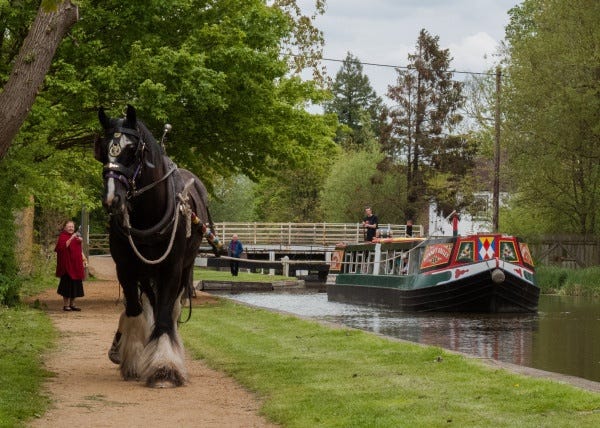
Many of the great houses of England built the network of canals that became instrumental in inland trade and the transportation of goods.
Entire estate villages, schools, and almshouses were constructed and funded for the communities great houses were bound to.
The English countryside and its iconic moors, paddocks and rock walls were preserved through the manors in which families dwelt and relied upon.
The house of lords, prior to the removal of power, had a vested interest in protecting the integrity of the country in which they served, if only for the good of their family and the country in which they would inherit.
When wealth is built and stewarded over multiple lifetimes, generation projects become more possible, and the vision for the future is extended out past the several decades on which individuals spend on this earth.
“An absolutely equal divisions of assets among the male children at death is the practice most usual with society at the period when family dependency is in the first stages of disintegration.”
-Sir Henry Maine
Entail
Having justified governance to protect the family that will outlive you is essential to growing a great estate. The landed families understood this, and turned the legal system in their favor.
Under English law, freehold land passed automatically to the eldest son as part of the ‘entail’.
An entail is a restriction placed on a piece of land that dictates who can inherit it, in a fixed order, for generations into the future.
It removes the power of the current holder to change that order.
The heir of the family estate isn't a normal owner; he's more akin to a life tenant with a very long leash, bound by rules set by an ancestor, often generations earlier.
This meant the estate itself was kept out of a father’s personal will entirely.
In turn, this also mean that the estate had to be kept out of his own power to redirect as well.
These restrictions meant the patriarch could not:
Sell it
Give it away
Leave it in his will to someone outside the entailed line
Mortgage it in ways that would bind his successor
Split it up among multiple children
Meaning the estate would remain in its concentrated for to go to the next in line after him.
This is what made primogeniture a legal rule rather than just a preference: the realty wasn’t distributed by choice at each generation, it followed a fixed line of succession by default. However the law developed some flaws (much like our own) that needed creativity to circumnavigate.
Addressing a Limitation
Originally, landowners in their dynastic ambitions, made the entail last “until the end of the world”.
But as English law developed, courts grew wary of land being frozen out of the market indefinitely by the wishes of long-dead ancestors. This became known as the 'dead hand' problem. So the law adapted.
So the law adapted: by the 18th century, an entail would only stand for a single generation…until the owner's son turned 21.
After that, the property was free of the entail and would become "fee simple" land when passed down; meaning it could be sold, mortgaged, or broken apart, undoing an entire history of effort within a few short years.
A single heir could sacrifice his entire line's future, and his country's, for nothing more than his own gratification - not unlike the boomers in their twilight years.
Patriarchs understood the implications of this. Primogeniture wasn’t just law, it was deeply cultural for them to continue the work and stewardship of generations of consolidation.
So it became traditional to create a new settlement using a little coercion.
If the eldest son wanted his allowance (often needed to marry well) and eventually the estate and its full income, he would jointly bar the existing entail alongside his father.
They would then immediately sign a fresh settlement with a new entail in its place.
The son received the income he needed now, and the family estate was secured for another generation.
This cycle guaranteed the continued succession of a family line.
The Rest of the Family
In the discussion of primogeniture, much of the focus has been put on the eldest. But it is important to understand that the consolidation of assets benefit the entire family.
Some families had no surviving sons. Where the entail was drafted ‘in tail male,’ this meant the estate skipped daughters entirely and passed instead to the nearest male relative (sometimes a distant cousin) regardless of how close a daughter’s own claim felt.
Where the entail was open to female heirs, a daughter could inherit the estate directly, but on marriage her husband would typically gain control of it, often absorbing it into his own family’s name and holdings unless the settlement specifically required him to take hers instead - which was fairly commonplace to ensure the continuation of a family line.
We have already mentioned the distribution of personalty, which alone helped establish personal wealth and potentially new branches of families.
Younger sons were often installed or established in other institutions. Traditionally this meant each successive son was funneled into the law, the church, the military, or civil service, though the order may have varied.
Younger family members would receive annuities or stipends to supplement their income, and/or a lump sum paid out either as they came of age or married.
Dowries were also set aside for daughters. Their portion was a fixed sum (eg £10,000) to be paid out on marriage. This allowed her new family to get a decent start in life and gave her leverage in finding a good husband.
The point is that just because the eldest was to inherit the estates and their management, it did not work to the detriment of the other siblings.
Often times the burdens that came with stewardship and continuing the work of ones ancestors was almost a relief to have escaped for younger siblings.
There are documented cases where second sons are filled with dread when they are to become the heir, for the responsibilities that come with it.
And that is the biggest takeaway - the management of the assets was real work, not an opportunity to become a wastrel. The family mission and honor must be continued.
Before we move to modern adaptation, there is one more element that is often forgotten in a modern context, highly relevant for establishing great estates.
Liquidity
The liquidity of modern markets has a lot to answer for when it comes to legacy.
In the era where virtually anything can be sold relatively quickly, it is easy to forget how markets used to work.
They were slow, methodical, relied much on social capital, and in most cases, highly illiquid, in particular when it came to land.
This had the benefit that even if a patriarch wanted to liquidate some land for personal benefit, it was not so simple, and would affect his reputation with his peers.
They were forced to never touch the principle, and instead rely on the income from their investments, which is common practice in modern investing to ensure growth and sustainability.
To bring this now to a modern context, you want to minimize the amount of saleability in your estate - whether it be through the nature of your assets, the culture of your family, to through legal instrumentation.
Modernization
Many see primogeniture as an outdated practice, while many modern estates accumulated over a lifetime are divided, spent, consumed, or atomized to the point of irrelevance.
The intent behind partible inheritance is well-meaning, but ultimately undermines the greater good of the family over generations for short-term gratification.
The elements of primogeniture that granted families so much strength can be brought forward and even improved upon.
Consolidation
In primogeniture, the primary benefit for a family line was that resources became concentrated. But they were also able to grow and be stewarded by a concentration of management too.
Just as the holder of an entailed estate was never a full owner but a lifelong steward, bound to preserve the corpus for the next generation, the same principle should govern family resources today. The inheritors manage and benefit…but they don’t consume.
When your family has a central pool of self sufficient and growing resources, they are able to be used to create opportunities for your descendants.
The point is not to fund a life of passive dependency and doing nothing. It's to fund the possibility of pursuing anything.
This important distinction does not come from words or legal documentation alone, but through a deliberate assembly of multiple components working in tandem.
Individual wealth is different to family wealth, and a clear distinction needs to be enforced and inherently understood.
How this wealth is consolidated will vary by family. If there is a wealth creator, he may forgo his wealth later in life for the benefit of the line. Other families pool in the present generation to acquire assets otherwise out of reach. Others again use multiple lifetimes to create a growing central body of wealth for the family, making the efforts of each individual’s wealth cumulatively more powerful for the family with each passing generation.
In order for modern families to reap the same benefits they must replicate consolidation in a manner that is beneficial to their family.
A Vehicle
When arable land was the height of wealth, the heir was the vehicle that held it. But he did more than contain it; he was also the centralized authority that managed it. The inheritance and its steward were one and the same.
Land is no longer the ultimate form of productive wealth, but the principle hasn’t changed: your family still needs a vehicle to hold its collective wealth, and a structure to manage it.
The difference is that these two functions no longer need to live inside a single person.
Wealth still has to be concentrated to be preserved, that part of primogeniture’s logic will never change.
What’s different (and advantageous) is that concentration can now be engineered with greater specificity rather than inherited by birth order.
Trusts, family offices, family LLCs, operating businesses, and family-held property can each potentially serve as the modern equivalent of an entailed estate (the vehicle). While a family constitution, board, or governance structure plays the role the heir once had.
Most families will lean on some combination of these, chosen to fit their scale and circumstances. The vehicle itself matters less than what it has to do: hold the wealth, govern its use, and keep building the foundation forward.
Governance
The advantage of the entail structure was its legal binding to prevent the division of land.
When alterations to the law made entail more temporary, families relied on tradition and the guidance of a single individual - arguably concentrating culture and governance in one person, just as it concentrated the estate itself.
When modern families use legal structures as a replacement, governance too needs to be replaced to ensure that family resources are managed well for the benefit of all.
From a legal perspective, trust deeds allow for rules to be put in place to ensure the responsible use of funds. A company can use voting and non-voting shares to control distributions and direction.
But no amount of legal instrumentation can protect a family’s core: its culture.
The creation and intentional focus on culture is essential to a family’s success and governance.
It should be universally understood by all members that the family is a cohesive unit.
The family is an ‘opt-in’ institution', not in the sense of who belongs to it, but in the sense of who chooses to actually participate in it. Participation brings responsibility and inclusion. It is work, but there are great benefits.
Most successful multi generational families have a mission - something they set out to do with their wealth. They hold family meetings, have standards and family rules that are adhered to, and genuine consequences when they aren't.
More mature families also often create family constitutions that guide the decision making process and culture for future generations.
One thing that cannot be replicated is the need for a head of the family - a successor to the present family leadership.
For more on the establishment of family governance and culture refer to The Family Continuity Audit, which paid supporters have access to.
Succession
Without the rule of primogeniture, we are given much more freedom in the choice of successor to head the family.
As covered earlier, the eldest son under entail was more caretaker than owner, tasked with the stewardship and growth of his family line's assets for the good of the whole.
But a fixed line of succession guarantees nothing about fitness for the role. The eldest son inherited by birth order, not by merit.
Looking at cases where heirs were chosen intentionally for their strengths rather than by default, six key attributes of a great successor emerge.
The more they possess and the stronger they are in each, the better they will lead your family. These are called the VITALS
You can learn about them in full here.
This gives modern families a distinct advantage over the landed families of old. You have the freedom to choose the right heir for the task of leading the family through what they will face next, and that is suited to the assets you possess.
Provision
The idea behind consolidating wealth is to benefit the entire family.
Historically this may have meant annuities, dowries, and lumpsums (from personalty).
The latter is not out of the question, especially from personal wealth of elders, even in instances where some is reserved to pool into the family vehicle/s,
Some families also grant a portion of funds from family reserves to individuals once specific milestones are met — not age-based, but tied to standards the family itself has agreed upon (eg marriage for 10 years, employment for 5 with promotion of increasing responsibility, the creation of a profitable enterprise.)
Others use a form of income matching up to a certain threshold to allow children the possibility to pursue a less lucrative, but satisfying career.
Families spin off or acquire businesses for members to run, employ well suited family members, or compensate those that help operate aspects of familial management.
It can be loaned for businesses, used to purchase family homes that are rented back at discount market rates to members, or cover student loans on successful employment in their field of study for 3 years.
There are countless ways in which to use family funds for the greater benefit of the family.
Yet the running theme is consistently that there is never something granted for nothing. There is never an opportunity to live a life of pure consumption off the work of ones ancestors.
The modern standard belief surrounding inheritance is that it should be partible, and divided in its entirety (often equally) upon death to individuals.
For a legacy family, this is seldom the case. Individual wealth may be split among heirs, or combined into a family pool, but individuals are never permitted to fall into stasis or self-destruction, especially with use of the family’s funds.
Being part of the family and benefiting from the family resources brings with it responsibility and standards to uphold. Anything less is only letting them down.
Illiquidity by Design
A family friend had a farm in their family for 5 generations.
Upon her father’s passing, it went to her step mother (not the woman that raised her). She sold it, and used the money to travel and fuel a life of consumption in excess of a decade.
Now, of the family farm there is little to show. What could have been put under management and at least have provided some modest income. Or the liquid funds reallocated to more appropriate assets, has been dissolved.
There was no governance, nor legal protections, no culture binding now disparate siblings.
The family wealth was not made illiquid and built into a structure to protect future generations, and was thus lost. Now, this family friend battles to make ends meet - a sad fate for generations of successful farmers.
As for the step mother, she too has little left of the wealth her former husband’s line spent generations accumulating, all spent on selfish consumption. A story that frustrates me to no end - but serves as a powerful warning.
No vehicle held the asset. No governance dictated its use. No culture bound the family enough to even ask the question before it was gone. An asset was liquidated to provide for the whims of an individual.
Liquidity, or at least the access to maneuver capital freely for personal use can undermine a family’s collective financial success.
The assets and structures that benefit a legacy family are not necessarily the same as those for individuals. Slow, steady, generational gains and improvement win out in the long run.
You never want to draw down the principal, and the revenue is a separate component of the family wealth to be set aside for reinvestment in both the collective and into the individuals of the participating members.
If you have a wealth manager (internal or external), family office, business, holding company, or even simply family governance principles surrounding investment, this should be firmly understood culturally and ideally made legally binding.
Financial liquidity and impulsivity is an enemy of your legacy.
Purpose Beyond Inheritance
The most important part of generational wealth isn’t the fiscal capital - it’s the culture.
The collective of the family comes together to create something greater than what the individuals within it can become on their own.
In primogeniture, this was two fold.
First was the capital - there was a mission behind it. To provide for the family line, to grow and steward it, and to ensure those reliant on the family (members, tenants, and country) were served by the wealth.
Second were the members themselves. They were taken care of, and guided into other institutions to represent the family in other ways. Be it in government, military, church or familial alliances.
This recognition added to the family's standing and helped it accomplish its mission, holding up the family name in the process.
A legacy family will often create opportunities for the heirs. Social capital can be leveraged for employment, education, and entrepreneurial ventures. Talents and connections, when combined, can lead to greater projects than if the individuals were forced to pursue them on their own.
Ultimately however, there was a purpose for the wealth beyond the estate itself. Passive dependency was not permissible.
This is what you should replicate in your family culture to help bind generations together culturally and maintain a perpetual state of growth and creation - avoiding stasis, entropy, and the creation of the trust fund kid stereotype, at all costs.
A family must have a purpose behind its unity, this serves as the driving force that brings your family together.
For more on this line of thinking, I recommend learning about the Anchors of Continuity here.
Joining the Gentry
When an estate is torn into pieces with each generation, it becomes so small that nobody can stand on it.
Primogeniture was Britain's answer to that problem.
It was by no means perfect, but the principles underneath it worked for centuries, because it did something modern families fail to see the logic in - consolidate resources and perpetuate stewardship.
To build true generational wealth, you don’t need to follow primogeniture precisely. But you do need to draw from its strengths and adapt them to the modern day in order to establish a lasting estate worth inheriting.
Dividing your asset base will leave you with scraps too small to make any real impact, and scatter your family so thin, they cannot grow in standing.
Every legacy family requires concentration over division, stewardship over consumption, and a culture strong enough to hold a family together by choice.
None of this happens in a single lifetime. A family is not a project you complete - it’s one you hand off, generation after generation, each building on what the last one held together.
The landed families of old understood this instinctively; their plans were never measured in years, but in lines of succession stretching past their own deaths.
This is the part modern ambition struggles with most. We’re trained for instant gratification and short time frames.
But an estate worth inheriting in perpetuity was never built by one man in one lifetime, and it never will be.
It’s built by a family that treats itself as an ongoing generational project.
One generation laying a foundation it will never fully stand on, so the next one can reinforce it, not build precariously on it to enjoy the view.
The real inheritance the principles of primogeniture protected was not the land or wealth itself, but the discipline of thinking past your own lifetime.
With this philosophy of consolidation, no matter where you start from, generational wealth becomes inevitable.
From my family to yours,
Ben Black
Did you intend for this article to be free?
It’s packed full of information and new words to add to my vocabulary, which I thank you for.
I appreciate the discussion around the role of the children who are not direct heirs to the estate. In the modern context, telling your second child “hey buddy, this isn’t going to be yours” needs a better reframing!